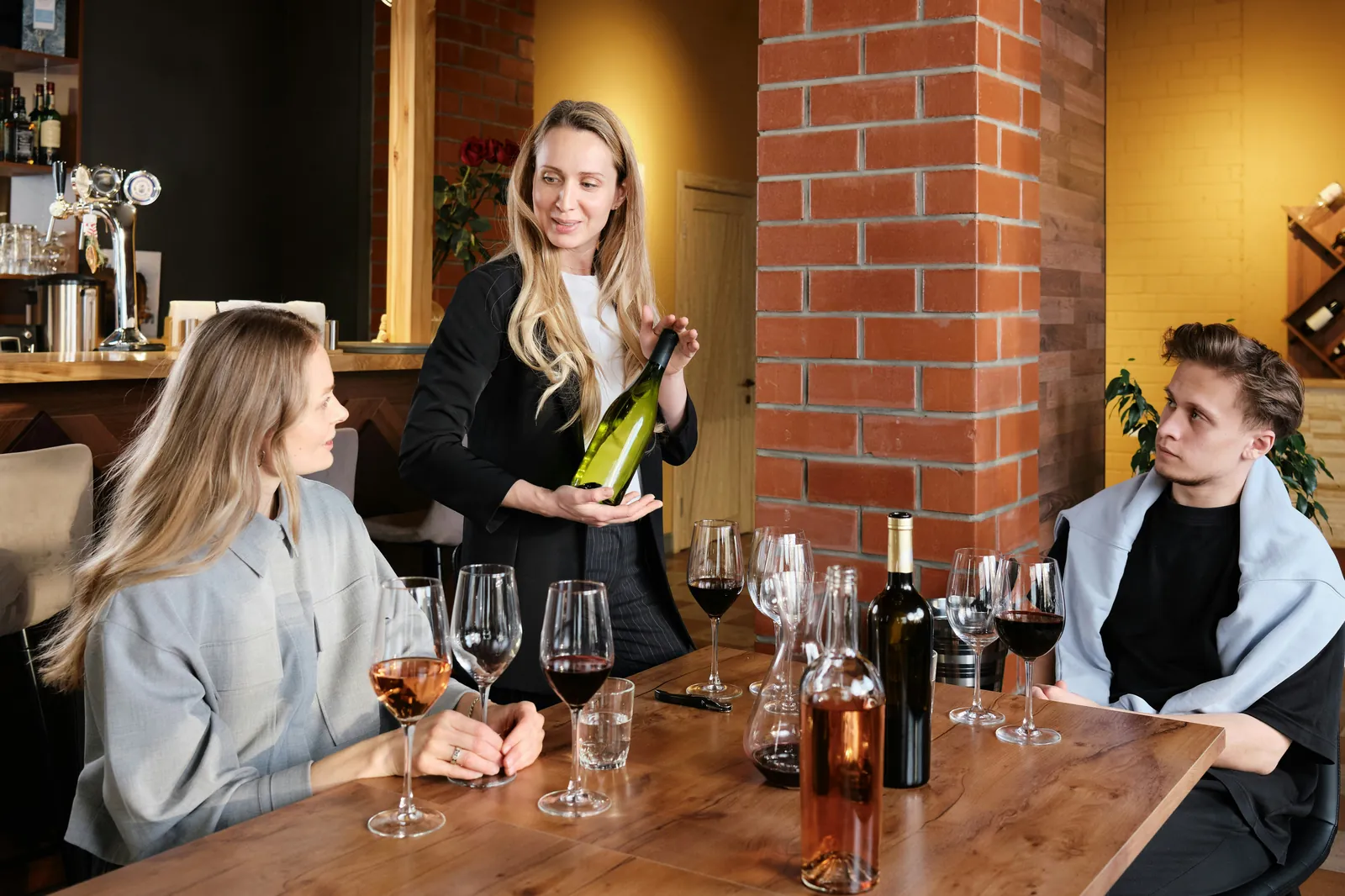
What learning to taste actually changes
Tasting a wine isn't sitting an exam. It's learning to slow down for the length of a sip. Once you start observing what's in your glass rather than just drinking it, something shifts: you begin to remember sensations, to recognize regions, grape varieties, vintages. And the pleasure roughly doubles.
It has nothing to do with being "good at wine." It's about attention. The same Bordeaux drunk distractedly between two text messages and drunk deliberately — glass tilted toward the light, nose dropped into the bowl — are not the same experience. The method laid out here is exactly that: a way of noticing what's already in the glass.
And to be honest about the practical side: understanding what you drink helps you choose the next bottle more precisely. Instead of saying "not too tannic and not too expensive," you can describe what you actually want. That concrete vocabulary is what we're going to build together, starting from what you smell and taste — not from a list of terms to memorize.
Equipment: what you actually need, and what you can skip
Start with the glass. A good tasting glass is tulip-shaped — wider in the middle, narrowing toward the rim — so that the aromas concentrate toward your nose rather than dissipating into the air. An ISO standard tasting glass or a Burgundy-style glass (large bowl, generous curve) works very well. You don't need to spend a lot: glasses at 5 or 6 euros each do the job perfectly.
A decanter is useful but not essential at this stage. For a young, tannic red — the kind of wine that still has rough edges and hasn't had time to open up in the bottle — 30 to 45 minutes in a carafe can transform it dramatically, softening the tannins and releasing aromas that were locked in. For a fresh white or a sparkling wine, skip it entirely. What matters first is serving temperature. A red wine served too warm (above 18°C / 64°F) turns alcoholic and heavy, the heat pushing the booze forward and flattening everything else. A white served too cold (below 8°C / 46°F) goes mute, its aromas blocked by the chill. Take your reds out of the cupboard 30 minutes before serving, and your whites out of the fridge 15 minutes before.
Have still water on hand, and some plain white bread or neutral crackers to clean your palate between wines. You don't need a spittoon at home — unless you're working through a serious number of bottles in one sitting. In normal life, you swallow, and that's perfectly fine.

The eye: what color tells you before you've smelled a thing
Tilt your glass to 45 degrees against a white background — a sheet of paper, a white tablecloth, the palm of your hand. Look at the color at the center of the glass, then toward the rim, where the wine thins out. That outer edge is where the most useful information hides.
A young red wine often shows violet or bright garnet. As it ages, the color shifts toward brick, tile, and an orange-brown at the rim. A young white wine gleams with a pale, almost greenish yellow; with age and time in oak barrels, it takes on golden and amber tones. A ten-year-old white can have the color of a light cognac — and that can be genuinely beautiful.
Note the brilliance and clarity too. A dull, cloudy wine can signal a fault, but it can also be an unfiltered natural wine — a style made with minimal intervention in the cellar, where the winemaker deliberately avoids filtration to preserve texture and character. A sediment at the bottom of an old red is completely normal: it's just tannins and pigments that have polymerized and fallen out of solution over time, and it's harmless. Swirl the glass next and watch the "legs" or "tears" — the streaks that run down the inside of the glass after you've spun the wine. They indicate viscosity, which relates to alcohol content and residual sugar. Thick, slow-moving arches mean a generous, full-bodied wine. Thin, fast-running tears point to something lighter and more taut.
The nose: how not to miss half the pleasure
This is usually the part that intimidates people most — and yet it's where everything happens. More than 80% of what we call "taste" is actually perceived through smell, via the retronasal passage at the back of the throat. Take time to smell before you drink.
First nose: lower your nose into the glass without swirling. What you catch here — flowers, fresh fruit, a faint mineral coolness — is the most volatile, most fleeting part of the wine's aromatic profile. It disappears quickly. Note it mentally. Then swirl the glass to oxygenate the wine, and smell again. This second nose is usually richer and more layered: spice, wood, leather, stewed fruit, earthy notes that weren't there before.
To identify aromas, start with broad families before moving toward specifics. Do you smell something fruity? Is it red fruit (strawberry, cherry, redcurrant) or dark fruit (blackcurrant, blackberry, blueberry)? Fresh fruit or cooked, jammy fruit? Working in concentric circles like this is far more effective than trying to land directly on "blackcurrant" or "violet." And if you can't find a word, it doesn't matter: your olfactory memory is training itself with every glass.
A wine can also show tertiary aromas — sometimes called the "bouquet" — which develop through aging in barrel and in bottle: mushroom, truffle, tobacco, coffee, honey, beeswax. These appear in older vintages and can be puzzling the first time you meet them. With practice, you start to recognize them as the signatures of a wine that's had time to become something more than it was.

The mouth: attack, mid-palate, finish — and what you're really feeling
Take a small sip — not too small. Hold the wine in your mouth for a few seconds before swallowing, letting it move gently across your tongue and the inside of your cheeks. Here's what to look for.
The attack is the first sensation when wine touches your palate. Sharp and bright? The wine is tense and driven by acidity. Soft and round? It's more generous, perhaps slightly off-dry — meaning it retains a small amount of residual sugar, even if it doesn't taste obviously sweet. The mid-palate is about texture: does the wine flow like water, or does it have a richer, silkier, creamier consistency? For red wines, this is where you feel the tannins — that mild drying sensation on your gums and the inside of your cheeks, more or less pronounced depending on the grape variety and the vintage. Tannins that have softened with age slide past smoothly; young tannins grip and catch.
The finish is what remains after you swallow. Length is sometimes measured in "caudalie" — a caudalie is simply one second, so this is just a fancy word for "how many seconds does the taste linger." A short finish runs 3 to 5 seconds. A great finish runs 15 to 20 seconds or beyond. That's not an absolute rule — some light, delicious wines have a short, clean finish — but it's often a reliable indicator of complexity.
Look for overall balance: acidity, alcohol, sugar (or the perception of it), and tannins in reds. A harmonious wine is one where none of these elements shouts louder than the others. It's that sense of everything fitting together that people sometimes call a wine's "integrity" — and it's usually what makes you reach for a second glass.
The aromas you'll meet most often: a working vocabulary
You don't need to memorize 200 descriptors. Here are the aroma families that come up most often — enough to start recognizing them tonight.
Red and dark fruit: strawberry, cherry, raspberry, redcurrant in lighter, fresher wines — think Pinot Noir from Burgundy (the region in eastern France famous for some of the world's most elegant reds) or Gamay from Beaujolais (just south of Burgundy, producing wines that are juicy and low in tannin). Blackcurrant, blackberry, blueberry, plum in more powerful wines — Cabernet Sauvignon, or Syrah from the Rhône valley (a long corridor running south from Lyon where the Syrah grape produces peppery, meaty reds). When those fruits start to taste stewed, jammy or cooked rather than fresh, the wine has usually come from a warm climate or spent a long time aging.
Flowers and vegetal notes: violet in a young Cahors (a robust red from southwest France, made mostly from Malbec) or a Côtes-du-Rhône built on Syrah. Peony in a Burgundy. Green pepper in a Cabernet Sauvignon that wasn't quite ripe when it was picked. Fresh grass in a Sauvignon Blanc from the Loire valley — the long river running through central France, home to some of the country's most aromatic white wines. These vegetal notes can be genuinely pleasing — a hint of fresh mint in a Pomerol (a small, prestigious appellation on Bordeaux's Right Bank, known for Merlot-based wines of unusual softness) is a good thing — but if they dominate, they usually signal underripeness.
Spice and wood: white or black pepper, cinnamon, clove, vanilla, cedar, tobacco. These aromas typically come from time spent in oak barrels or from extended aging. A wine that has spent too long in new oak smells like a carpenter's workshop; a wine that has been well handled integrates the wood so that it supports the whole rather than overwhelming it. To get a sense of how style and aromatic profile vary across regions and grape varieties, our selection of the best French red wines is a good practical starting point.
Temperature, aeration, serving: the details that make a real difference
One of the most common mistakes is serving wines too warm in summer and too cold in winter. A red drunk at 22°C (72°F) in an overheated living room loses all its freshness and turns alcoholic, almost syrupy. Aim for 15 to 17°C (59–63°F) for a red Burgundy — made from Pinot Noir, which is delicate and loses its character quickly in the heat — and 16 to 18°C (61–64°F) for a fuller-bodied Bordeaux. These are far lower than what old wine guides meant by "room temperature," a phrase that dates from before central heating was standard in French homes, when rooms were genuinely cooler.
For whites, avoid the trap of the over-cold fridge. A Chablis or a Meursault — both white Burgundies, made from Chardonnay, Chablis in the northern end of the region giving steely, mineral wines, Meursault in the Côte de Beaune giving richer, more buttery ones — served at 7°C (45°F) is mute: the aromas are locked in, the texture vanishes. Take it out 15 to 20 minutes before serving and aim for 10 to 12°C (50–54°F). Oxidative whites — certain wines from the Jura (a small mountain region near the Swiss border, famous for wines deliberately aged under a film of yeast that gives them a nutty, almost sherry-like character) and some natural wines — benefit from being served closer to 14°C (57°F), where their complexity can fully express itself.
For sparkling wines, 8 to 10°C (46–50°F) is the ideal range. If you want reliable references for exploring bubbles without overspending, our page on the best Champagnes for the price covers bottles worth opening specifically to practice tasting — yeast, brioche, citrus, chalk, all the classic descriptors are there to find. On aeration: a simple rule applies — the younger and more tannic the wine, the more it benefits from breathing. Thirty minutes in a carafe for a young red from the Southwest (the broad region stretching from Bordeaux toward the Pyrenees, making dense, often Malbec- or Tannat-based reds); nothing for an old, fragile Burgundy that you decant only to separate the sediment from the wine.
Food and wine pairing: the logic, not the rules by heart
You've probably heard "fish goes with white wine, meat goes with red." That's a starting point, not a law. A more useful approach is to think in terms of weight and texture: a light dish with a light wine, a rich or fatty dish with a wine that has enough acidity or body to cut through it.
Salt in a dish softens the tannins in a red — which explains why a well-aged, salty cheese pairs beautifully with an old Burgundy. Acidity in a wine cleans the palate against rich or creamy food: that's why a Chablis with oysters (the wine's mineral, almost saline edge mirrors the brine of the shellfish) or a Sancerre — a Loire valley appellation producing bright, grassy Sauvignon Blanc — with a fresh goat's cheese log works so naturally. Avoid heavily tannic reds with delicate fish: the tannins amplify the iodine character of the fish until it turns bitter and unpleasant.
Sweet wines pair well with fruit-based desserts or blue-veined cheeses — Sauternes, the famous sweet white wine from Bordeaux made from botrytis-affected grapes, with Roquefort, a sheep's milk blue from the south of France, is a classic pairing for a reason: the wine's sweetness and acidity cut through the cheese's richness and salt. Sweet wines can also work with spiced food, where their softness tames the heat of chili. And yes, you can drink red with fish. The world doesn't end. It depends entirely on which fish and which red. For pairing ideas on a budget, our selection of wines under 15 euros is ideal for experimenting without pressure: you can try combinations, get it wrong, and go again without much cost.
One last thought: the best pairing is usually the one you enjoy. The rules are there to be understood before you intelligently ignore them.
How to improve: training your palate without spending a fortune
The best way to improve at tasting is to taste regularly and take notes. Not necessarily in a formal tasting notebook — a few words in your phone will do. What you smelled, what you liked, which pairing you tried. Over time those notes become a personal wine memory, far more useful than any generic guide, because they're built on your own sensory experience rather than someone else's.
Taste by comparison. Two Pinot Noirs side by side — one from Alsace (the long, narrow region running along France's eastern border with Germany, where Pinot Noir makes lighter, more translucent reds), one from Burgundy — will teach you more about both regions than any amount of reading. Two Sauvignon Blancs — one from Sancerre in the Loire, herbal and mineral; one from New Zealand, tropical and lush — reveal how dramatically the same grape variety can change when planted in different soils and climates. It's the single most instructive exercise in wine, and it requires nothing more than two bottles and two glasses.
For finding good reference bottles at reasonable prices, we recommend Vinatis, an online wine merchant with a wide catalog and detailed tasting notes for each wine — which is genuinely helpful when you're building your first reference points and want to know what you should be looking for in the glass. Their selection covers all French regions and lets you order comparison wines directly, without having to track them down in a shop.
Don't be afraid of being wrong. Saying you smell strawberry when someone else finds cherry is not a serious mistake. What matters is that you smell, you search, you remember. Your palate calibrates with every glass. And the next bottle will always be more interesting than the last, because you'll be looking at it differently.
Common questions
Do you have to spit the wine out to taste it properly?
In professional tasting — where a winemaker, wine merchant or critic might work through dozens of samples in a single session — yes, spitting is standard practice, and it keeps your judgment sharp throughout. At home, with two or three bottles, it's not necessary. The key is to take time to observe what's in the glass before you swallow, not to avoid swallowing altogether.
What is the difference between primary, secondary and tertiary aromas?
Primary aromas come from the grape itself: fruit, flowers, fresh herbs and vegetal notes. Secondary aromas develop during fermentation, when yeasts transform the grape sugars into alcohol: think bread dough, brioche, butter, yogurt. Tertiary aromas — also called the bouquet — build up during aging in barrel and in bottle: leather, mushroom, coffee, honey, tobacco, truffle. In a young wine you'll mainly find primary aromas; in an older one, the bouquet can be the most interesting part of the glass.
How do you know if a wine is corked?
A corked wine smells of wet cardboard, damp cellar, or musty cloth — sometimes described as a wet dog smell. The cause is TCA (2,4,6-trichloroanisole), a compound produced when a naturally occurring mold in a cork reacts with chlorine-based compounds. It's not harmful to drink, but it masks all the wine's fruit and character, making it flat and unpleasant. If you detect it on the first nose, the bottle is faulty. At a restaurant you can send it back; at a wine merchant you can return it — most will replace it without argument.
How many glasses does it take before you can actually start picking out aromas?
You can start from the very first glass, as long as you take time to look for something. Training speeds up recognition, but even a complete beginner can distinguish 'fruity' from 'woody' or 'light' from 'heavy' on a first attempt. Precision and the ability to name specific aromas comes with practice; the curiosity to search for them is available immediately, on any glass.
Are there wines that are easier to taste when you're just starting out?
Yes. Start with wines that are expressive and clearly defined in character. A Sauvignon Blanc from the Loire valley — places like Sancerre or Pouilly-Fumé — is highly aromatic, full of grass, grapefruit and flint, and there's no ambiguity about what you're smelling. A Gamay from Beaujolais gives you fresh red fruit and that characteristic light-bodied juiciness with very little tannin, easy to read. A Riesling from Alsace brings citrus, white flowers and a distinctive mineral quality often described as petrol or slate in older wines. These wines speak clearly and simply — which makes them ideal for putting your first words to what you're sensing.