
What you're actually drinking when you open a Saint-Émilion
Before getting into classifications and hierarchies, start with what's in the glass. Saint-Émilion is built on merlot — the grape that dominates the blend, often at 60, 70, sometimes 90% of the wine depending on the property. That single fact sets it apart from the famous wines of the Médoc, the long peninsula to the northwest of Bordeaux where cabernet sauvignon leads most blends. Merlot produces something rounder, fleshier, and more immediately approachable than cabernet — which is one reason Saint-Émilion has found a wide international audience.
On the nose, you get ripe red fruit — black cherry, plum — and with careful winemaking, notes of liquorice or dark chocolate in the background. On the palate, the tannins (the mouth-drying compounds derived from grape skins and seeds) are present but soft, wrapping around the fruit rather than gripping. This is what makes most Saint-Émilion easier to drink young than, say, a Pauillac or Saint-Estèphe from the Médoc, where cabernet sauvignon builds firmer tannins that need years to soften.
Cabernet franc plays a supporting role, and it's an important one. This is a close relative of cabernet sauvignon, but lighter-bodied and more aromatic — it brings freshness, floral lift, and sometimes a faint note of green pepper or violet that comes through on wines grown on clay-limestone soils. At a handful of iconic properties, cabernet franc actually takes precedence over merlot. Cheval Blanc is the most famous example: its wine leans heavily on cabernet franc, and the result has a complexity and tension that makes it unlike almost anything else in Bordeaux.
The main thing to hold onto: Saint-Émilion is not a single style. The appellation — a French term for a legally defined wine region with its own production rules — covers a wide spectrum, from easy-drinking everyday wines to serious bottles that reward a decade in the cellar. The geology of the vineyards explains most of that range, and it's worth understanding before you start spending money.
Plateau, slopes, plain: why the soil divides everything
Saint-Émilion covers between 5,400 and 5,500 hectares depending on the source and the year of the count — roughly the size of a mid-sized French town and its surroundings, about 80 kilometres east of the city of Bordeaux along the Dordogne river. But those hectares are not all equivalent. The vineyard breaks into three broad zones, and understanding the difference goes a long way toward explaining why two bottles with the same appellation name can taste so different.
On the limestone plateau at the heart of the appellation, and on the slopes that fall away from it, the soils are clay-limestone: cool, well-drained, and mineral. This is where the most celebrated properties are concentrated — Ausone, Angélus, Pavie, Canon. The wines here tend to be more structured and more mineral, with a tension that gives them genuine ageing potential. If you're buying a bottle to cellar for several years, this is where to look.
Further down the slopes, toward the villages of Saint-Christophe-des-Bardes and Saint-Hippolyte to the east and southeast, the soils become sandier and more silty. The merlots grown here are generous and supple, often ready to drink earlier. These are frequently the pleasure wines at friendlier prices — and there's nothing condescending about that. A good Saint-Émilion from a sandy slope alongside a slow-roasted duck is a simple and genuinely satisfying match.
To the west, the plain that borders Pomerol — a small, prestigious appellation that sits immediately northwest of Saint-Émilion — brings gravelly soils closer in character to those of its famous neighbour. A few properties use this position to remarkable effect. Cheval Blanc sits right on this boundary, planted on a mix of ancient gravel and sand, and the wine it produces has a character that belongs to neither appellation entirely. The geology of Saint-Émilion does more to determine wine quality than any name on the label, and that's the most useful thing to understand before buying.
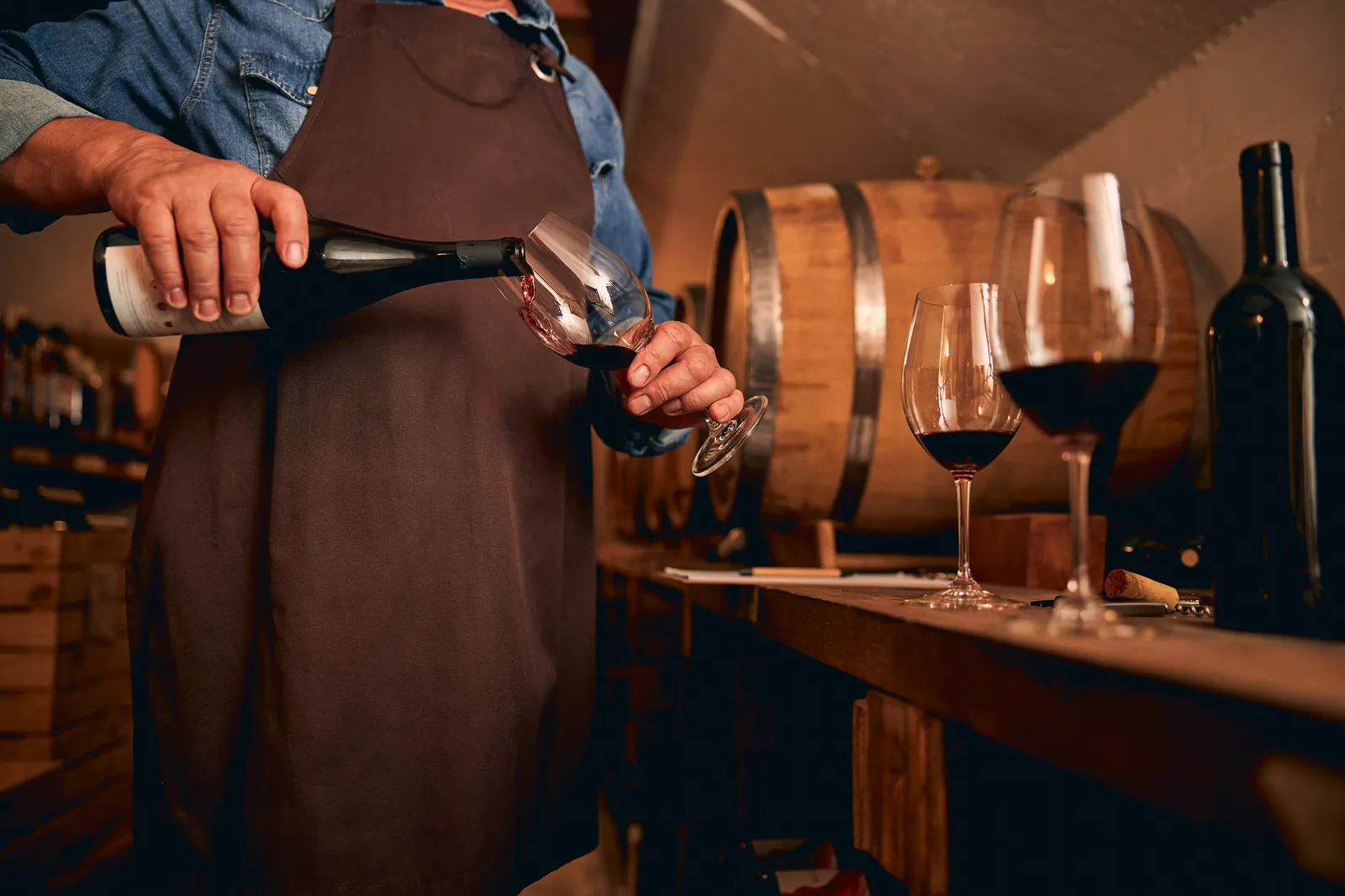
The Saint-Émilion classification: how it actually works
The Saint-Émilion classification is unlike any other in France for one central reason: it is revised periodically. In theory, this is a good idea — rewarding estates that improve, penalising those that coast on reputation. In practice, every revision has triggered significant controversy and, in several cases, legal action from estates that lost their ranking.
The hierarchy has three tiers. At the top sit the Premiers Grands Crus Classés, themselves split into two categories. Category A currently contains four châteaux: Ausone, Cheval Blanc, Angélus, and Pavie. These are the reference points of the appellation, wines that trade at high prices and age comfortably for ten to twenty years or more. Category B contains roughly twenty properties, including Canon, Figeac, La Gaffelière, and Troplong Mondot — serious wines that in many cases rival the category A estates in quality, but at somewhat lower prices.
Below that, the Grands Crus Classés: around sixty châteaux that represent the credible mid-range of the appellation. This is often where the best value sits. Estates like Beau-Séjour Bécot, Larcis Ducasse, and Villemaurine offer real pleasure at prices that remain accessible relative to the top tier.
Then there is the category that catches many buyers off guard: Saint-Émilion Grand Cru, without the word Classé. This is not a classification in the same sense. Any producer within the appellation can use this designation provided they meet a slightly stricter set of production rules than the basic appellation requires — modestly lower yields, and a mandatory tasting panel assessment before the wine is bottled. Several hundred properties qualify. Grand Cru alone is not a guarantee of quality or of a particular price point, and it's one of the most common sources of confusion among buyers. For a broader look at how Bordeaux classifies its wines across all its main appellations, our guide to the Bordeaux classified growths provides the wider context. The body that oversees and certifies all French appellations, including Saint-Émilion's classification, is the INAO — the Institut National de l'Origine et de la Qualité — a government agency whose published lists are publicly accessible and kept up to date.
The châteaux worth knowing, by budget
Rather than an exhaustive list that serves no one, here's a practical orientation by what you want to spend and what you're looking for.
Under €20, and new to Saint-Émilion: look for carefully selected châteaux in the Saint-Émilion Grand Cru category — not because the designation guarantees quality, but because a knowledgeable retailer who has tasted through the range can point you to the ones worth buying. Château Rocher Bellevue, Château Tour Baladoz, and Château Fonroque (which farms organically) all offer genuine character and straightforward pleasure at this price. Online, retailers like Vinatis maintain a serious selection in this range with detailed tasting notes and clear vintage information.
Between €30 and €60, you're in the territory of the lesser-known Grands Crus Classés — properties that don't generate headlines but whose winemaking is often meticulous. Château Grand Mayne, Château Bellefont-Belcier, Château Destieux: names that require no explanation at the table, just the wine in the glass. These are the bottles you open for a good dinner and let speak for themselves.
Above €80, you reach the Premiers Grands Crus Classés B. Figeac may be the most elegant of the group, its high proportion of cabernet franc giving a finesse that feels almost closer to Burgundy — the wine-producing region to the northeast of France known for its refined, aromatic reds — than to classic Bordeaux. Canon has regained serious form since its acquisition by the Chanel fashion house, which invested heavily in the vineyards and cellar. La Gaffelière leans toward freshness and precision. Allow at least three to five years of ageing for any of these to show their best.
The category A châteaux — Ausone, Cheval Blanc, Angélus, Pavie — trade from around €200 to €300 per bottle for a current vintage, and considerably more for older ones. These are exceptional wines by any measure, but at that price the question of occasion matters. They deserve the right moment and the right table.

When to open a bottle of Saint-Émilion
The short answer: it depends on the level in the hierarchy and the vintage. But there are concrete guidelines that will save you from opening a great bottle too early and finding it closed and disappointing.
A straightforward Saint-Émilion — the basic appellation or a Grand Cru without the Classé designation — is made to be drunk within two to four years of the harvest. Its fruit is fresh, its tannins are soft, and it has no particular capacity for ageing. Open it alongside a roast leg of lamb, a duck breast — magret de canard in French, the full, fatty breast of a duck raised for foie gras, with far more flavour than a standard duck breast — or a board of aged cheeses. Thirty minutes in a decanter (a wide-bottomed glass vessel used to aerate wine before serving) is enough to open it up.
A Grand Cru Classé from a good vintage benefits from at least five to eight years before it reaches its best. The period between 2015 and 2020 produced a run of outstanding vintages at Saint-Émilion. A 2016 or 2018 from a serious property is still young today and can wait comfortably. If you open one now, pour it into a decanter two hours before serving and expect something still slightly closed but clearly promising.
The Premiers Grands Crus Classés operate on a different timescale entirely. A great Ausone or Cheval Blanc from a strong vintage can age for thirty years or more. Drinking them too young means missing most of what they have to say. If you have these in a cellar, patience is the most productive strategy. If you want to drink something from this tier now, look at vintages like 2006 or 2008 — less concentrated than 2010 or 2015, but more open and approachable today, and often available at lower prices because the vintage reputation is quieter.
What to eat with Saint-Émilion: pairings that actually work
Merlot's natural roundness makes Saint-Émilion one of the more food-friendly red wines in Bordeaux. It doesn't seek confrontation — it looks for complement. That means a wide range of dishes work without risk, provided you match the weight of the wine to the weight of the food.
Red meat is the pairing that never disappoints. A duck breast cooked in a pan with ceps — cèpes, the large, nutty wild mushrooms known in Italy as porcini, one of the great autumn ingredients in French cooking — a beef tenderloin in pastry crust, or a roast leg of lamb with herbs: the fleshy merlot in a Saint-Émilion wraps around these flavours without overwhelming them. For the more structured versions — Premier Grand Cru Classé especially — consider dishes with a long braise, like a beef cheek slow-cooked in wine or a traditional daube (a Provençal braised beef stew). The natural gelatin in braised meats softens tannins in a way that makes both the food and the wine taste better.
Mushrooms are outstanding allies. Ceps, morels, truffles — their earthy, umami-rich aromas echo the undergrowth and liquorice notes that develop in older vintages of Saint-Émilion. A simple truffle omelette alongside a ten-year-old Saint-Émilion is a combination that looks understated and delivers something remarkable.
For cheese, look to firm, aged styles — Comté or Beaufort work well. Comté is a hard, nutty cow's milk cheese from the Jura mountains in eastern France, aged anywhere from a few months to several years; Beaufort is a similar style from the Alps. Both have enough structure to stand up to red wine without the fat-acid clash that soft, runny cheeses like a ripe Camembert can cause, coating the palate and effectively erasing the wine. And contrary to what's sometimes said about red wine and non-meat dishes, a lighter Saint-Émilion pairs genuinely well with poultry in a sauce, game terrines, or a risotto made with dried ceps — the key is matching complexity on both sides of the pairing.
Recent vintages: a practical guide to buying now
Vintage assessments only matter if they help you make a decision. Here are practical reference points for purchases you might make today.
2022 is being presented as a hot, concentrated vintage, with merlots that reached very high ripeness levels during the summer. Early tasting reports are enthusiastic, but there is a genuine risk of wines that lack freshness on the warmer, lower-lying sites. Châteaux on cool clay-limestone soils — the plateau and slopes — have handled the conditions better than those on the plain. If you're buying this vintage on release, focus on properties you already trust and whose terroir retains natural acidity.
2020 is excellent and more consistent than many feared when the growing season began. It combines concentration with elegance, particularly on the plateau, and the wines are still young but show good structure and balance. This is a safe choice among serious Grands Crus Classés — wines from this vintage should hold comfortably for ten years.
2018 stands out as probably the best vintage of the decade at Saint-Émilion. The merlots are sumptuous, the tannins polished, and the freshness was preserved despite a warm summer — a combination that's harder to achieve than it sounds. If you find 2018s that are ready to drink in two to five years, they're worth buying now. The 2016 is quieter in reputation but shows remarkable elegance, and many examples are more approachable today than the 2018.
For those looking for value, 2014 and 2013 are two vintages that the market has undervalued. Neither year produced the kind of ripe, opulent wines that attract high scores and high prices, but both yielded fresh, taut, genuinely enjoyable wines that are drinking well now — and whose prices have barely moved because the labels don't generate excitement. Underrated vintages are often where the most interesting drinking happens.
Saint-Émilion and its neighbours: Pomerol, Fronsac, and the satellites
Saint-Émilion sits within a cluster of appellations on the right bank of the Gironde — the broad estuary that divides Bordeaux into two very different wine-producing halves. The right bank is merlot country; the left bank, across the water, is cabernet sauvignon country. Understanding this divide helps make sense of why Saint-Émilion and its neighbours feel related to each other and distinct from Médoc wines like Pauillac or Margaux.
Pomerol is the nearest neighbour of prestige, a small appellation immediately to the northwest. It has no official classification — unusual for Bordeaux — yet it contains some of the most sought-after wines in the world. Pétrus, made almost entirely from merlot grown on a distinctive iron-rich clay known as crasse de fer, routinely sells for well over €2,000 per bottle. Le Pin, Lafleur, and Clinet are other names that attract serious collectors. Merlot on Pomerol's gravel-and-clay soils produces something denser and more velvety than most Saint-Émilion — a different expression of the same grape in subtly different ground. If you enjoy Saint-Émilion, Pomerol is a logical next step; the top names are expensive, but there are several smaller properties producing serious wine at accessible prices.
The satellite appellations — Lussac-Saint-Émilion, Montagne-Saint-Émilion, Saint-Georges-Saint-Émilion, and Puisseguin-Saint-Émilion — are legally distinct from Saint-Émilion itself, each with its own appellation rules, though they share the Saint-Émilion name by historical agreement. They sit just north and northeast of the main appellation, on similar soils, and the wines follow the same merlot-led logic. The quality level is generally more modest, but certain producers make convincing wines at €10 to €15 that compare favourably with a basic Saint-Émilion Grand Cru at twice the price. These are useful bottles for weeknight dinners or larger gatherings where you need several bottles without spending heavily on each.
Fronsac and Canon-Fronsac, a few kilometres further north along the Dordogne, deserve more attention than they typically receive. These appellations produce structured, clay-limestone wines with firm tannins and genuine ageing potential — in a style that's arguably more traditional and less polished than modern Saint-Émilion, which some drinkers find more interesting. Prices remain modest. They're one of the more rewarding areas to explore for anyone who wants to move beyond the obvious names on the right bank. If you enjoy discovering lesser-known appellations, our guide to the Côtes du Rhône covers a region with entirely different grape varieties and landscapes but the same spirit of finding quality outside the spotlight.
Buying Saint-Émilion: practical advice
The Saint-Émilion market is large and, at the edges, genuinely confusing. A few reference points help you avoid the traps and find the wines that are actually worth what you spend.
First, read the label carefully. Some châteaux use names that sound loosely similar to famous estates without being classified at all. Grand Cru Classé and Premier Grand Cru Classé are protected designations whose use is regulated — a property cannot put either on a label without earning the rank through the official assessment process run by the INAO. Grand Cru alone is not protected in the same way. If you're uncertain about a specific château, the INAO publishes the current classification list online — it's public, it's free, and it's kept current after each revision.
For online purchases, Vinatis maintains a well-organised selection of Saint-Émilion across all price points, with tasting notes, vintage information, and the ability to compare properties side by side. This is particularly useful for tracking price movements on sought-after vintages and for accessing wines that don't appear on supermarket shelves.
In a physical wine shop — what the French call a caviste, meaning an independent specialist whose entire business is wine, distinct from a supermarket wine aisle or a general drinks retailer — don't hesitate to ask the person behind the counter what they've opened recently, what surprised them, what they'd buy at different price points. A knowledgeable independent wine merchant who tastes regularly through the Saint-Émilion range can direct you to properties you'd never find on your own, and that kind of guidance is worth more than any list.
Finally, for the great vintages and the top châteaux, the secondary market for older bottles is worth considering. A Premier Grand Cru Classé B from 2010 or 2012 — two outstanding vintages that produced wines of exceptional depth and balance — may be less expensive today than it was at release, and it's at or near its peak drinking window. The finest experiences in Saint-Émilion don't always come from the most recent harvest.
Common questions
What is the difference between Saint-Émilion and Saint-Émilion Grand Cru?
Saint-Émilion Grand Cru requires slightly lower yields in the vineyard and a mandatory tasting panel assessment before the wine is bottled and released. It is not a classification in any hierarchical sense — several hundred properties are entitled to use it, provided they meet those production conditions. Do not confuse it with Grand Cru Classé, which is a genuine rank awarded through an official evaluation process by the INAO, the French government body that oversees wine appellations. Grand Cru Classé appears on far fewer labels and means something substantially different.
At what age should you drink a Saint-Émilion Premier Grand Cru Classé?
For a Premier Grand Cru Classé B from a good vintage, plan on at least eight to ten years of cellaring before opening. The category A châteaux — Ausone, Cheval Blanc, Angélus, Pavie — can age for twenty to thirty years in the right conditions. If you want to drink one of these wines while it is still relatively young, decant it for at least three hours before serving and expect a wine that is still somewhat closed — structured and interesting, but not yet showing its full range.
Why is the Saint-Émilion classification so controversial?
Because it is revised on a roughly ten-year cycle, which means every revision produces winners and losers among the classified estates. Both the 2006 and 2022 revisions led to legal challenges from demoted châteaux, in some cases resulting in court injunctions that temporarily suspended the publication of the new ranking. Part of the controversy is methodological: the classification criteria include factors like the estate's reputation and the price its wine fetches on the market, not only an objective assessment of wine quality. That approach is inherently open to dispute.
What should I buy if I enjoy Saint-Émilion but want to spend less?
The satellite appellations are the most direct answer: Lussac-Saint-Émilion, Montagne-Saint-Émilion, and Puisseguin-Saint-Émilion all sit just north of the main appellation on similar soils, follow the same merlot-led style, and sell for considerably less. Fronsac and Canon-Fronsac, a short distance further north along the Dordogne river, are also worth exploring — they produce structured, clay-limestone wines with genuine ageing potential at prices that remain modest. These are some of the most consistent sources of value on Bordeaux's right bank.
Can you pair Saint-Émilion with fish or vegetarian dishes?
With most fish, the combination is difficult: the tannins in the wine react with fish proteins to produce a metallic, bitter finish that flatters neither the food nor the wine. The exception is oily fish in a rich sauce — salmon or tuna prepared in a braised or stewed style (what the French call en daube) — where the fat and sauce buffer that reaction. For vegetarian dishes, the pairing works better than many expect: a risotto made with dried porcini mushrooms, a mushroom and cheese tart, or a potato gratin all complement a lighter Saint-Émilion well. The principle is matching the weight and richness of the dish to the structure of the wine.